

Why I Wrote a Book About Cannibalism
Adam Cohen on the law school Halloween party that sparked Captain's Dinner

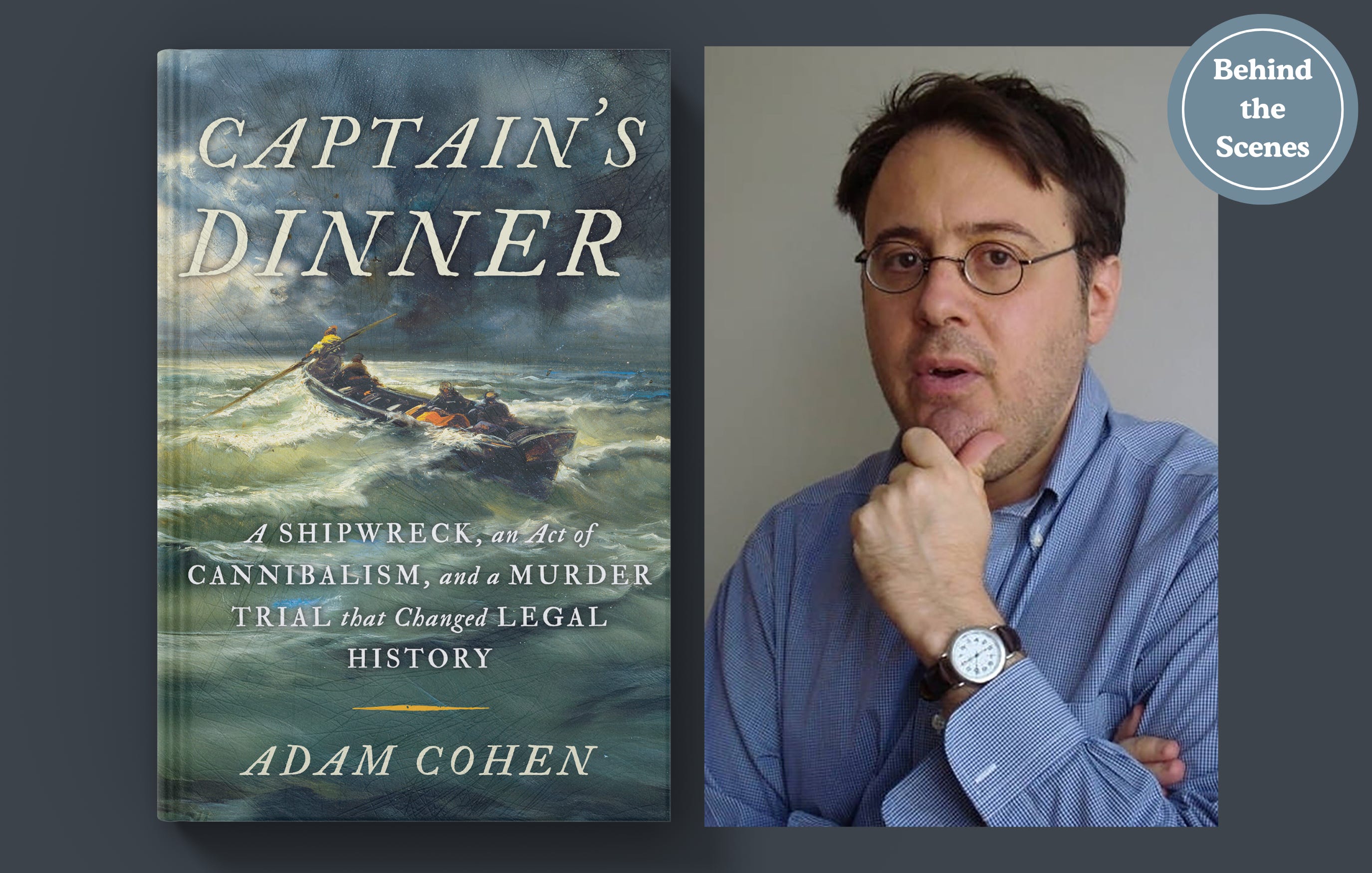
I am often asked how I came to write a book about cannibalism—which is a bit out of line with my previous writing. As it happens, Captain’s Dinner was inspired by a Halloween party.
In my first year of law school, my roommate and I threw a “come as your favorite case or legal doctrine” party. (What can I say—it was law school—geekiness was in the air.) Our classmates came as an array of criminals and tortfeasors (and one poor victim of some negligently handled dynamite). My roommate, Paul Engelmayer, who is now a federal judge in New York, hung ketchup-splattered raw chicken drumsticks around his neck and came as Captain Thomas Dudley—cannibal.
Dudley was the captain of the ill-fated Mignonette, a ship that was wrecked in a storm on a voyage from England to Australia in 1884. As the Mignonette sank, Dudley and his crew of three escaped in a lifeboat, and when food and water ran out, he decided to kill the cabin boy so he and the other survivors could survive by consuming his flesh and blood. At the time, survival cannibalism at sea was actually quite common—it was quaintly known as “the custom of the sea.” But Dudley and his first mate, who helped kill the cabin boy, were put on trial for murder—the first time that had happened in Anglo-American history.
My criminal law class did not read the case, known as Queen v. Dudley and Stephens, but because of that Halloween party, it has always stuck with me. When I was trying to decide what to write about next, I looked into it—and it turned out to be about far more than just a desperate act of cannibalism at sea. (Don’t get me wrong, though: the cannibalism was quite interesting, too—and in the course of writing the book, I’ve become something of an authority on the subject.)
Queen v. Dudley and Stephens raises some of the most profound issues that moral philosophers debate today. It pits utilitarianism—which says it is better for one person to die and three people to live—against rights-based theories of justice—which hold that murder is an inherently wrong act, and that the cabin boy had the right to live his life. It also contains within it one of the great questions religions and ethical schools have pondered since ancient times: when, if ever, is it acceptable to sacrifice an innocent person?
The story also includes a good amount of adventure at sea, and a gripping man vs. nature story of survival. There is also some ripping out of vital organs, some drinking of blood, and some insight into what human flesh tastes like—for people interested in that kind of thing.
The more I learned about it, the more I knew I wanted it to be the subject of my next book.
—Adam
Another great book from author Adam Cohen. Looking forward to reading it.